30 November 2008

A hole in the bag


Last week's proposal by Mayor David Miller to implement a five-cent fee for plastic bags at all grocery stores in Toronto is a delightful example of politics bending over and taking it from business. Instead of rewarding consumers for cutting back on wasteful plastic bags (the original proposal was to offer a ten-cent discount for every bag reused), Mr. Miller has now proposed to punish consumers for using plastic bags. This provides grocers with an opportunity to make a further (if miniscule) profit. Although the implementation of this proposal will make consumers more mindful of their plastic bag usage and waste, the original plan would be quite a bit more effective. The new proposal is replete with a large hole caused by Mr. Miller's desire to please businesses while appearing to support leftist causes. 

Another recent government proposal (on a grander scale) full of holes is the auto industry bailout. The suggestion that using public money to regenerate the North American companies known for making shit-quality private automobiles is preposterous. The bailout will not generate more jobs, it will simply provide crutches for an industry that has long been fading. The auto industry is beholden to the free market system. It is demand that determines the cost of automobiles. That being said, the automobile does not have a public value. Thus, public money should not be allocated to support automobile production. 

Beyond the limited public value of the automobile, the industry is actually detrimental to public interest and well-being. It is well-known that the fossil fuels generated by automobiles are damaging to the environment. Do we want one of the cornerstones of our newly established environmentally-conscious economy to be the auto sector?

If public money is granted to the automakers, the public should have a say in how the money is spent. How about putting the funds towards the development of ethanol-based cars? Or solar-powered cars? 

Jerk chicken and Irish moss.


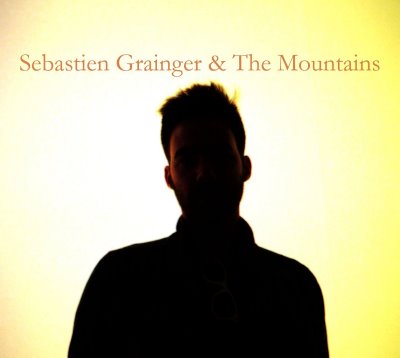
So, a catch-22 arose as I read Pitchfork's review of the Sebastien Grainger album. If the self-appointed zeitgeist of interweb music reviewers was to herald the album as fantastic, I would be noticeably irritated--to the point that I might kick a series of doors, setting off said doors' alarms, and subsequently being arrested for mischief. The droning masses of wicked-hip indie kids who are always a step ahead of the rest ("The Acorn is sooooo 3.75 months ago, get with it") might then swallow up Grainger and his Mountains counterparts and step on my toes at the next show with their gritty Vans and Chucks. Conversely (get it?),  if Pitchfork was to dismiss the album as drivel (specifically in comparison to DFA1979), I might be enraged to have what I believe to be one of the best albums of 2008 torn to shreds. Furthermore, having it done at the hands (or dirty, sweaty, fingers) of some asshole who interned at Spin and is a level 87 vegan is infuriating. After reading the review I was relatively pleased, however, with Joe Colly's tendency to tread the line separating the two.

The album certainly does showcase Grainger's "command of melody" and "works best at its most straightforward."  That being said, I believe the entire album is rather straightforward. Colly writes it himself that the album "ventures down a more conventional rock path" -- that is what I find so novel and refreshing about Grainger's music. 

Overall, I find the album to be one of the most earnest in recent memory. As you listen to tracks like "Niagara" and "I'm All Rage," one can sense the passion and sheer fun had by Grainger and The Mountains in the studio (the former is said to have been recorded during a night of many alcoholic drinks) and on the stage (although the latter is not actually a live recording, it certainly captures the tenacity of a live Grainger show). 

Yes, DFA1979 certainly was a rather significant and groundbreaking band. However, neither Sebastien Grainger nor Jesse Keeler will ever "escape the shadows of their former glory" if critics insist upon comparing their current projects to DFA1979. With his album, Grainger aims to achieve a different aesthetic. To begin with, his solo work is devoid of the abrasively sexual lyrics. He has matured considerably and sings of more than pushing in and pulling out. DFA1979 was a dance-punk band that did not spend much time pondering anything outside the realm of booze and sex--what else do early 20-something males have to think about anyway? To gain a better perspective on Grainger's new musical and spiritual mentality, I advise at least a quick read of Exclaim's November piece on him (which, by Exclaim standards, is one of their finer articles).

Ultimately, I find that as per usual, Pitchfork has missed the mark. To put it simply, Grainger's album is one of the finest albums I have heard all year and despite listening to it several times a week since first downloading an advance (don't fret, I purchased the vinyl from Grainger himself at the album release show), I have yet to even slightly tire of it. That being said, a rating of 5.8 is more than a low blow--it's a fucking drop-kick to the nuts. Fuck you, Joe Colly--but, thank you. 

How about a champagne enema?

I still cannot completely wrap my head around the practice of soaking a tampon in alcohol and inserting it to gain an alcohol buzz that is apparently more intense and helps to avoid the liver damage and potential for puking. 

As for the bro-down alternative, funneling a beer up your anus, I completely understand and support it. Dude, let's do more ass-bombs! 

20 November 2008

This temporary flesh and bone


Simply put, the new ablum by Las Vegas' The Killers is akin to their first release, Hot Fuss (2004). The soon to be released (November 24th) Day & Age sees a return to the synth-pop-rock, new wave-tinged sound of the first album. The Anytown, USA anthemic nature of Sam's Town (2006) was polarizing for fans who had come to expect danceable nu new wave ditties from The Killers. Although personally I prefer the straightforward American rock of Sam's Town, I must concede that Bruce Springsteen certainly has that genre covered. Despite my general disappointment in Day & Age, two tracks boldly stand out. The first is "This is your life," which fantastically incorporates tribal chanting throughout and a jumpy but generic "indie" bassline. The second is "Goodnight, Travel Well," which is not only the best track on the album, but one of the best tracks I have heard this year. 

18 November 2008

I doubt your commitment to Sparkle Motion


The Age of Fear has reached its end. The election of Barack Obama brings about the dawning of a new age, the Age of Hope (cue the "Age of Aquarius" song, but replace "Aquarius" with "Hope" and stretch out "Hope" so it fits the spot where "Aquarius" usually is).

Obama ran on a platform that was upheld by two key concepts: hope and change. The Bush administration functioned primarily on a platform of fear. By spreading fear amongst the American populous, the Bush administration could act rashly, harshly, and violently to carry out their agenda. That being said, to end the Age of Fear, Obama ran under the pretext of beginning the Age of Hope upon his election to office. His campaign essentially aimed to juxtapose hope and fear and thus polarize Obama from Bush, the Democrats from the Republicans.

For as much as I find Obama to be a dreamboat and exactly what America needs in a president, I do find his platform of hope and change to be somewhat problematic. The polarizing of fear and hope is reminiscent of a scene from Donnie Darko:


Just as Donnie argues that fear and love are not opposites, I argue that neither are fear and hope. To begin with, fear is implicit in hope. One can only be hopeful if there is an underlying fear--Timmy hopes he will pass his math test because he fears failing the class. Americans hope the Obama administration will fare better than the Bush administration because they fear more futile military campaigns and further detriment to international relations. The fear created by the Bush administration is implicit in the hope purported by the Obama campaign. They are not opposites.

That being said, in a way, Obama ran on a campaign of fear. The other keyword in his campaign, change, hinges itself on fear: if things do not change in America, the end result will be negative.

Another element of fear in Obama’s campaign was the usuage of the current state of economic peril and the looming recession. Although the fear of terrorism has begun to fade, the impending financial havoc of the receding economy has emerged as a new overarching fear.

Obama’s campaign used the doomed economy as a means to generate fear on the campaign trail. The Obama bid asserted that McCain's economic plan guaranteed certain peril for the lower and middle echelons of American society: tax breaks for large corporations and wealthy individuals. Ultimately, this tactic aimed to balloon the pre-existing disquietude Americans felt about the economy.

To clarify, by no means do I suggest that Obama or his aides have misled the American public. Nor do I suggest that he is an immoral man unfit to be president. Barack Obama is an articulate, intelligent, and charming man--precisely what America is in dire need of at this point in time. I simply wish to point out that his rhetoric is a little problematic. The Age of Fear has not come to a close, it has simply taken a new, less aggressive form. Fear is a fantastic marketing tactic and a presidential campaign that does not make use of it will most likely be an unsuccessful one. America lives in fear and will always live in fear. If it is not a fear of Communism then it is a fear of terrorism or the economic recession or Mad Cow or AIDS or the Boston Strangler. Hope and fear work together on the same side of the spectrum. The Age of Fear shall remain.

17 November 2008

Bumpy Lines


Do you remember the good old days when putting on a mock-British accent whilst singing some vaguely sexual lyrics gained you near-instant indie rock notoriety? This was a time long ago, before all this hipster nonsense was the supposed alternative culture and altbros wore skinny ties and danced awkwardly to The Killers at Dance Cave. During this era (2004-2006 AD) there were people who DID NOT wear skinny jeans and were still ACCEPTED as fully functioning members of alternative society. Unfuckingbelievable. No deep Vs either.

During the indiezoic period, it was musically acceptable to be a complete reproduction of Joy Division. In fact, such an act was heralded by indiezoic period emperor Pitchfork.

Luckily, back in 2004 Control had not yet been released and no one knew who Joy Division was. Had Interpol popped up on the scene recently, more than a few 30-somethings would recognize the "lucid expression of discontent and impending dread" Interpol vocalist Paul Banks exudes as a direct emulation of that depressed guy from that Control movie.

I must warn you, from here I will purport a conspiracy theory of sorts. No, it is not quite as half-baked as the Morrissey-Princess Diana conspiracy, but it is more legitimate than 9/11 Truth. Over the past five years or so, a few significant films have been released that are about musicians/bands who are either dead or far past their prime: Walk The Line, Ray, I'm Not Here, Control. Ultimately, I think this is simply a ploy to rejuvenate interest in the artists and sell merchandise.

The cast and crew of I'm Not Here worked in secrecy with the organizers of Bob Dylan's 2008 tour as well as the makers of dorm room full-size posters. There are many folk musicians (Sufjan Stevens, Rocky Votolato, Bon Iver to name a few) who sing about contemporary subjects and aren't 70 fucking years old and rich enough to buy a synagogue that should be plastered on dorm room walls and uploaded to iPods.

The cast and crew of Control were payed off by the estate of Ian Curtis in order to sell "that album with the bumpy lines thing" to entry level alts in order to collect royalties to pay for Natalie Curtis' Masters of Philosophy. Either that or they were paid off by Urban Outfitters to sell "t-shirts with the cover for that album with the bumpy lines thing."


Edit: To emphasize my poster point...


15 November 2008

I hope your friends explode

I too can briefly toy with Photoshop to create a graphically poor "ironic" poster for my shitty event. I too can adopt a cutesy DJ name and "spin" a musically directionless set for hipster poseurs who are afraid to venture further West than Bathurst. I too can book electro acts and other DJs who will never quite gain alt-weekly notoriety beyond the "Last week in the clubs" three-line snippets. I too can over-expand my emerging empire of entry-level alt mediocrity and have three or four events a week that are all the FUCKING SAME: the same cookie-cut playlists, the same poorly dressed attendees, and the same roster of DJs. It is like Groundhog Day, but with a crappier soundtrack and instead of starring Bill Murray, it stars some asshole with an irritating near-ringlet of a mustache. I too can make my friends explode. 

2 November 2008

Deep-Vs for all!


When I attended U of T and wrote my three or four infamous articles for the school's The Varsity student newspaper, I found myself resentful towards the paper's then-editor, Tabassum Something-or-other. She worked for The Toronto Star and was no longer a current U of T student. I felt as though she had overstepped her bounds in an attempt to fully grasp a journalistic holier-than-thou attitude and could only do so by reigning over undergrad students trying to build some form of a writing portfolio.

However, after reading a poorly-informed piece in last week's Eye that grasps onto the organic hemp fabric coattails of a poorly-informed Adbusters article, I have found a far worse and far more self-aggrandizing editor-in-chic than Tabassum Something-or-other. If you would like this blog post to be more than a cynical rant about Chandler Levack's misinformed hypocrisy, please read her article "Our Party Photos Are Us" before continuing to trudge through my Klostermanesque ramblings.

Some background information on Ms. Levack: She is currently the Editor in Chief of The Varsity and a regular contributor for Eye Weekly. She has also written for Spin and interned at Toronto's other alt-weekly, NOW. Impressive (that was not sarcasm, really). Seeing as Levack is still an undergrad at U of T, I do not suggest that she is in any way overstepping her bounds as Editor of The Varsity as Something-or-other did. Furthermore, based on her resumé, Levack certainly is qualified for the position.

The tobacco-laden distaste that lingers is for Levack's lack of credibility. She attempts to write this article as a third-party--someone who is far removed from the hipster scene.

However, she gives herself away early on as someone who simply is not astute enough to latch onto alt-trends early enough to not look like a poser. It was during her high school days eons ago that Levack perused the Cobranake's site: "After all, it was Cobrasnake printouts of gritty art punks with tattoos, black eyes and killer layers that I took to my hairdresser at the end of my Burlington cul-de-sac in high school ('I want my hair to look like that')."

Yes, Levack certainly latches onto the central existential chicken-egg question of hipsterdom: do hipster photo blogs show hipsters as they are, how they wish to be seen, or determine how they are seen? Why don't we ask Douglas Haddow to answer this culturaly iconographic question? You know, the fellow who wrote that Adbusters article a couple of months ago that made vodka-Red Bull waves in the hipster community?

As I wrote on this very blog, Haddow does not follow through with any of the culturally-pressing issues he presents in his article. Furthermore, he only scratches the surface of hipsterdom and simply identifies the most obvious and recognizable trends. However, in comparison to Levack's "why can't I be cool?" diary entry of an article, Haddow's piece is cutting edge journalism.

I will answer Levack's alt-culturally pressing chicken-egg question quite succinctly: no one fucking cares. Further proving that Levack simply does not "get it" (fuck you, Mom) is the fact that the whole party photo, nipple slip, Justice, deep-V aesthetic of hipsterdom is dead. The Cobrasnake is dead. All of these have gone the way of the mainstream. Everyone knows Justice. Bro-dudes wear deep-Vs, showing off their shaved chests, while still calling me a fag. Cobrasnake parties used to always be at a less accessible, less well-known Parkdale location. Considering the last one was at Circa, a ridiculously overpriced, oversized, overly neon-lit, centrally located amusement park of a club is proof enough that the particular hipster aesthetic recognized by Haddow, Levack, and EVERY-FUCKING-ONE ELSE has been snorted down by those less inclined to latch onto alt-scenes because they actually wish to be a part of something that is in fact an alternative to the mainstream (otherwise known as 905ers and all of my U of T undergrad classmates).

Looking past the fact that Levack found an old Adbusters last week at her new age "doctor's" teepee office and managed to get a poor rewrite of Haddow's article published, she gives herself away as a complete hypocrite and diminishes any journalistic integrity she may have possessed. This is accomplished by her inclusion of a Cobrasnake photo of herself at the end of the article, where she is proudly sporting the "oversized geek frames sliding down (her) nose" that she described so dismissively as a trademark of the hipster uniform.

As Levack ends with yet another question, "I wonder if some 17-year-old version of me will add my photo to their desktop “Haircuts I Like” folder?" she further proves that she simply wishes to be a part of the hipster scene. Once more, I will answer another of her pressing questions: No. No one likes your shitty haircut.