
And now I say, let us continue this list of wonder and amazement...
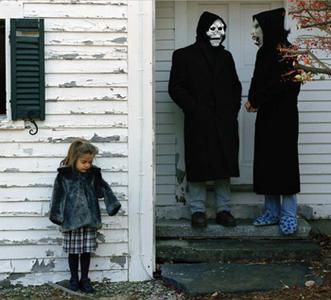
Deja Entendu was a genre-defining album. It is the quintessential emo-rock-with-some-screaming-post-hardcore-whatever album. Also, it is really fucking good. Beyond that, however, it is almost melodramatic to a fault. I was lucky enough to be 18 when the album came out. I felt it was a precise declaration of how I felt. A few years later I realized that I don't feel that way anymore. Not everything is so immediate, so intense, so life/death. Some things are far more important than how the girl you're dating worded a sentence on MSN Messenger.
This is why The Devil and God is one of the best albums of the decade. It marks a shift in Jesse Lacey's songwriting. A realization that there is more to life than how you feel when some girl won't answer your text messages. This album really is about transitioning from carefree teenhood to adulthood. Losing friends. Acquiring new responsibilities. Not living up to your parents' expectations. Not living up to your own expectations. Finding experiences outside of your own and relating to them, or if not relating, understanding them, even when they have nothing to do with you.
Beyond the lyrical content, this albums marks an experimental shift for the band. Sure, there is still that standard quiet-loud dynamic that is a trademark of Brand New's sound. Yet there is also experimentation—not to the point that any song is inaccessible, but to the point that it challenges your comfort with standard song structure.
The Devil and God... is a complete album. It opens with a bang that will catch you off-guard 30 or so seconds into "Sowing Season" and ends with the subdued, melancholy analogy of "Handcuffs." In between, it tells tales of early 20s disillusionment, familial loss, fate, and yes, even love. This album has made me cry, like a little girly-man who loves his Mom a lot. God is it ever good.
Sebastien Grainger and The Mountains

Who would have thought that the drum bashing, mustache-sporting, sexy lyrics-screaming, blasé attitude-possessing Grainger had the capacity to write such definitive, soul-baring rock and roll. Yes, Death From Above 1979 was a kickass band. They proved, far better than The White Stripes, that two-member bands can sufficiently rock. However, Grainger finally faced the emptiness of the sexfuck lyrics and lifestyle of DFA1979. While former bandmate Jesse F. Keeler was off "crafting beats," turning knobs, wearing sunglasses, straightening the brim on his baseball cap, buying tshirts, attending Vice parties, using one hand to hold an earphone to one ear while "spinning" with the other hand, taking the occasional bathroom break...in Miami!, Grainger kept a low profile and began writing the songs that would eventually become his solo debut. Apparently during this time he did quite a bit of maturing as well, as the lyrics on his album are a far cry from the sex-crazed, fuck-if-I-care, care-if-I-fuck ones of DFA1979.
Grainger's album is one of the most earnest I've heard in quite some time. Not only does he bare his soul lyrically, but musically as well. Though the tracks do not have the same bite as those of DFA1979, they are still powerful songs that often still possess a certain edge. This is music that literally everyone can enjoy on some level.
I spent the better part of 2008 gushing about Grainger to cohorts and on this here very blog. I just cannott help myself. He is that damn good.
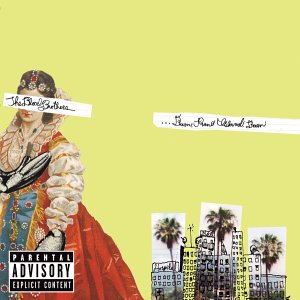
I have spent a great deal of time pondering in regards to which Blood Brothers album was the most significant to me. I nearly fell victim to the trappings of elitism by concluding that their "older stuff" is far superior. In fact, I was close to tipping my cap to 2003's Burn Piano Island, Burn. It is the band's "major label" debut and was recorded with a paltry $25 000 budget, which seems like a lot of money all in one breath, but really is not when you consider how much studio time costs and then factor in the cost of paying a producer and a mixer. This album marks the Blood Brothers' first concentrated effort. The song structures are still a bit of a mess, but there is quite a bit more coherence than in previous efforts This Adultery is Ripe and March on Electric Children. The barely-controlled chaos of this album keeps you on the edge of your seat. Each track is on the verge of exploding into complete catastrophic noise, but there is a single thread of melody and structure that just barely keeps everything together. Opening track "Guitarmy" is perhaps the finest 39 seconds of music (and a great AFP cover on NYE...) and is a microcosm of what one is to expect from the album. The track opens and closes with chaotic noise, but the main three verses have an identifiable structure and the song has a catchy tune. "Ambulance vs. Ambulance" and "USA Nails" give the middle of the album an incredible jumpy rush and demonstrate the fantastic balance between Johnny Whitney's falsetto-on-acid squeal and Jordan Blilie's gut-busting croon. "The Salesman, Denver Max" is a manic track that opens with a freak-folk verse that once again demonstrates the delicate balance between the two vocalists, while allowing you to briefly catch your breath. However, you know something more frantic is coming and the song is begging you to guess when it will kick in. Then just before the 1:00 mark it kicks in at and odd interval, catching you completely off-guard. The second verse continues with the folky acoustic guitar, but is accompanied by drums and an oddly contradictory funk-inspired bassline. These two offset styles once again demonstrate the very essence of what Blood Brothers are all about. Closing track "The Shame" sets itself up to be a somewhat predictable closer, with its slow-building verses and drumroll-backed chorus. However, the song completely delineates into a spastic drum and bass number with both vocalists screaming to no end just past the 1:00 mark. Then, just as you begin to expect the unexpected, the song returns to its original format, as the slow-building chorus kicks in, this time allowing itself to fully drag out for nearly three minutes, building up with gradually-increasing velocity, echoing guitar, more and more layers of vocals, a snare roll that is ascending towards a seemingly unattainable peak, background reverby "ohhs," all reaching towards a breaking point that once was unattainable yet seems so close now and all you have to do is reach just a little further and stretch out your arms as much as your bones and muscles will allow to grasp it, just a little further, you're almost there, your fingers are fluttering as their tips grace its surface ever so slightly and you're so close you just need to—

In all honesty, out of the Unholy Trinity of Blood Brothers' albums, I enjoy Crimes the least. I feel as though it is the weak bosom-buddy of Burn Piano Island, Burn. The album opens with the groove-heavy "Feed Me to The Forest" that lacks the punch an opening track requires (for this type of band, anyway). However, second track "Trash Flavoured Trash" helps to make up for this lackluster opening. A frantic track with razor-sharp, no-wave inspired guitar, distorted bass, and plenty of yelping and screaming, the albums suddenly appears to have gained its footing. However, although third track "Love Rhymes with Hideous Car Wreck" is a well-crafted song, it is out of place. With its subtle, melodic verse and repetitive-yet-understated chorus, it causes the album to lose the teeth and claws it grew during “Trash Flavoured Trash.” If Anything, “Love Rhymes…” is the type of track that should appear during the last half of a hard-hitting album and showcase the band’s ability to bare its soul and craft a more subtle, “romantic” song. However, Crimes is not that hard-hitting album. Its distinct lack of flow makes it my least favourite of the Unholy Trinity. However, that is not to suggest it is a bad album. It is still on this wicked awesome list.

What would turn out to be the Blood Brothers’ last album, 2006’s Young Machetes, wonderfully balances all aspects of the band’s musical ability. Rather than refer to thesaurus.com as a way to summon the most impressive multi-syllabic adjectives to describe this album and simultaneously impress and delight my readers with an apparent wealth of diction, I will reuse my discussion of Young Machetes from two years ago:
Lyrically, the Brothers reach a healthy balance of surrealism and kitsch on Young Machetes (as always) that causes you to ironically smirk as you ponder the benefits of doing psychoactive drugs. A fine example of this is on the track "Huge Gold AK-47"...Yes, the song is about war with imperialist implications in one sense, but the title is somewhat farcical, it creates a caricature of war. Lyrics range from surreal (yet still straightforward), "Those decadent war swans/With faces half drawn/Slinging blood-soaked carols at the slave ship sun," to comically over the top, "Huge gold Ak-47! Huge gold AK-47!/C'mon, it's 4 am, kick down the gate/And spray your ammo like champagne." By creating this type of caricature, we can actually take the song more seriously if we would like to...
On top of all this, the music just sounds fucking cool. Fast-paced, powerful, repetitive in a call-to-arms kind of way. It's music you can listen to on the subway and find yourself nodding your head, then moving your shoulders to and fro, then really nodding your head spastically, open palms banging your knees along with the beat, then in a flurry of self-consciousness realizing that you appear to other passengers to be having a seizure and thinking "perhaps I should tone it down a bit, they keep looking at me from the corners of their eyes," but then not giving a damn and continuing. Fuckers.Beyond these astute observations from two years ago, I will also point out that Young Machetes is structured in the precise manner that I suggested Crimes should have been. The album opens perfectly with a powerful, fast-paced, energetic first half. The opening 1-2 punch (woo sports!) of “Set Fire to The Face on Fire” and “We Ride Skeletal Lightning” sets the pace for the ensuing frantic path that is to be followed. In fact, Young Machetes barely stops to take a breather. There are a couple of mid-tempo numbers including “Lazer Life” and “Life The Veil, Kiss The Tank,” but even these two tracks ascend towards a more intense peak during each respective bridge. Ditto for closing track “Giant Swan,” which beautifully culminates the album through its dark storytelling, melodic vocal line, and catch-you-off-guard bridge. Finally, rather than aim for the unexpected, the Brothers end the track and the album with a gentle wind down and a simple closing of the curtains. A wonderful way to end the final act of a fast-paced, theatrical album and ultimately, the band’s career.
